
TL;DR:
- A first-time travel checklist emphasizes preparing essential documents, packing efficiently using the 5-4-3-2-1 method, and organizing arrival logistics well before departure. Proper documentation, such as a passport with six months’ validity and copies of all necessary papers, is crucial for a smooth trip. Planning health checks and offline arrival details enhances safety and reduces travel stress for first-time travelers.
A first-time traveller holiday checklist is a structured list of essential documents, packing items, health preparations, and arrival plans that together guarantee a confident, well-prepared first holiday. Most first-timers underestimate how much preparation goes into a smooth trip. Forgetting a single document can mean denied boarding; overpacking can turn a dream holiday into a physical ordeal. This guide walks you through every stage of preparation, from passport validity rules and the 5-4-3-2-1 packing method to travel insurance and arrival-day logistics, so you can focus on the excitement rather than the anxiety.
1. Your travel documentation checklist for the first trip
Documents are the foundation of every holiday. Get them wrong and nothing else matters.
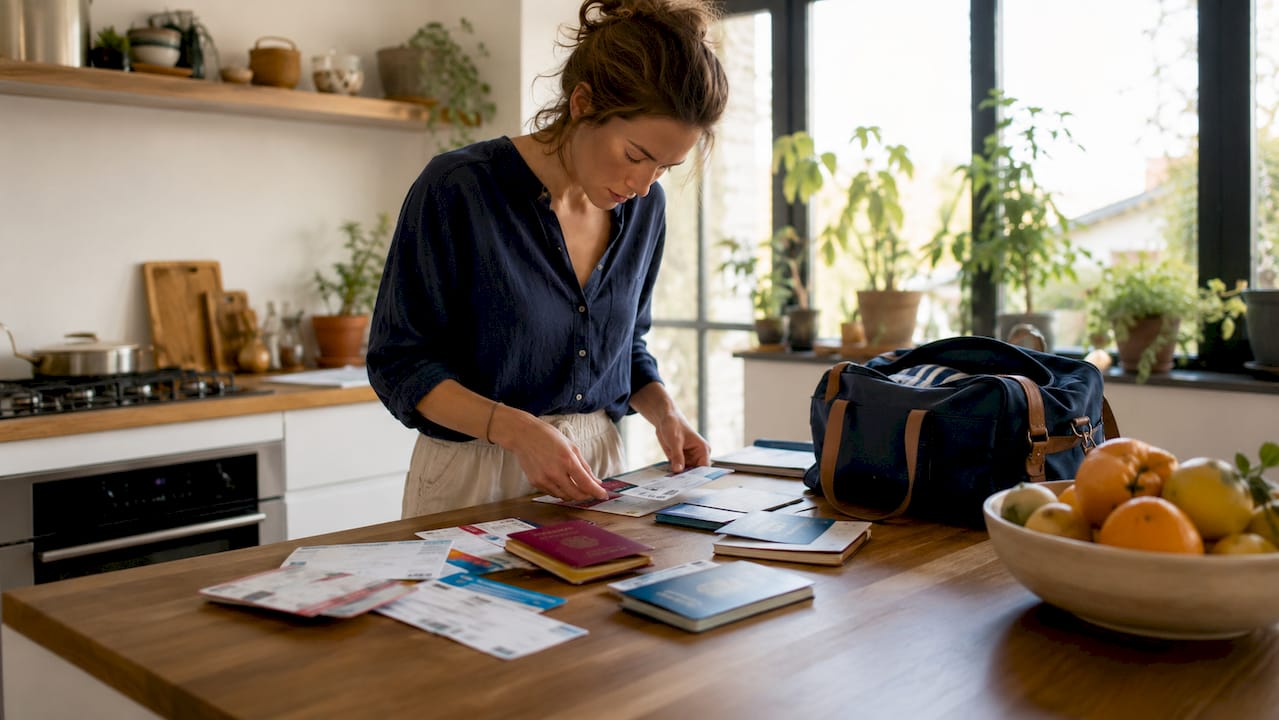
Your passport must carry 6 months’ validity beyond your return date. Airlines and border control enforce this rule without exception, regardless of your visa status. Many first-time travellers only discover this at check-in, which is far too late to fix.
Passport processing can take 6–12 weeks, so apply or renew at least three months before departure. Visas for certain destinations add further lead time on top of that. Start your travel documentation checklist the moment you book.
Here is what to gather and organise before you travel:
- Passport (valid for 6 months past your return date)
- Visa (if required for your destination)
- Travel insurance policy (printed and saved digitally)
- Flight confirmation and hotel booking references
- Emergency contact list (family, insurer, local embassy)
- Copies of all documents (one physical set in your bag, one digital set in cloud storage such as Google Drive or Dropbox)
- EHIC or GHIC card (for European travel from the UK)
- Vaccination certificates (where required by your destination)
Keep originals in your carry-on at all times. Critical documents in carry-on luggage are protected from the delays and losses that frequently affect checked bags.
Pro Tip: Photograph every document on your phone and email the images to yourself. You will have instant access even if your phone is lost or stolen.
2. How to pack for your first holiday: the 5-4-3-2-1 method
Packing is where most first-timers go wrong. The instinct to pack “just in case” leads to overpacking from poor planning rather than actual itinerary needs. A heavier bag means higher airline fees, sore shoulders, and slower movement through airports.
The solution is the 5-4-3-2-1 method. This formula gives you a balanced capsule wardrobe that works across multiple trip lengths and climates without wasting space.
The 5-4-3-2-1 packing formula:
- 5 tops (mix of casual and smart, all mix-and-match)
- 4 bottoms (trousers, shorts, skirts, or jeans)
- 3 accessories (belt, scarf, sunglasses or hat)
- 2 pairs of shoes (one comfortable walking shoe, one smarter option)
- 1 swimsuit (or equivalent for your destination)
Before you start filling your bag, answer four questions: What is the weather like? What activities are planned? Are there dress codes at restaurants or religious sites? How many days are you travelling? A strategic packing process built around these answers removes guesswork entirely.
| Category | Carry-on bag | Checked luggage |
|---|---|---|
| Passport and documents | ✓ Always | ✗ Never |
| Medications | ✓ Always | ✗ Never |
| Valuables (laptop, camera) | ✓ Always | ✗ Never |
| Clothing | Optional (essentials) | ✓ Main items |
| Toiletries (liquids) | 100ml max per item | ✓ Full sizes |
For carry-on liquids, the 3-1-1 rule applies at every UK and international airport. Each liquid must be in a container of 100ml or less, all containers must fit inside one clear resealable bag, and each passenger is limited to one such bag. Forgetting this rule at security costs you time and products.
Pro Tip: Create your packing list at least 7 days before departure and begin packing 2–3 days before you fly. This window gives you time to spot gaps without the panic of a last-minute scramble.
Packing cubes from brands such as Eagle Creek or Osprey are worth every penny. They compress clothing, separate categories, and make unpacking at your hotel genuinely quick.
3. Health preparation and safety essentials
Health preparation is the part of the new traveller packing list that most people leave too late. Schedule a health check at least 8 weeks before your trip. This gives your GP time to review your destination’s vaccination requirements and issue any necessary certificates.
Travel insurance is non-negotiable. A policy covering medical emergencies, trip cancellation, and lost luggage protects you from costs that can run into tens of thousands of pounds abroad. Toogood Travel clients benefit from ATOL and PTS protection, which adds a further layer of financial security on top of standard travel insurance.
Your health and safety checklist should include:
- Prescription medications (enough for the full trip plus a few extra days)
- Doctor’s letter for any controlled medications you carry
- Travel insurance documents (policy number and 24-hour emergency line)
- Basic first aid kit (plasters, antiseptic wipes, pain relief, antihistamines)
- Sunscreen and insect repellent (appropriate for your destination)
- Face masks (useful on long-haul flights and in crowded spaces)
- Vaccination record (yellow fever certificate if required)
Always carry medications in their original labelled packaging. Customs officers in many countries require this, and it avoids complications at border control.
Pro Tip: Check the NHS Fit for Travel website before your appointment. It lists destination-specific vaccination recommendations and health risks, so you arrive at your GP already informed.
4. Arrival day logistics: what first-timers overlook
First-time travellers commonly overlook arrival logistics such as offline maps and local transport information. This oversight turns what should be an exciting arrival into a stressful scramble. Preparing an offline arrival kit before you leave home costs nothing and saves enormous frustration.
Download Google Maps or Maps.me for your destination while you still have Wi-Fi at home. Save your hotel address, the nearest transport hub, and the local emergency number. Print a physical copy as a backup. Connectivity abroad is not guaranteed, and roaming charges can be surprisingly high without a plan in place.
Your arrival day preparation should cover:
- Phone connectivity plan (check your UK network’s roaming rates, or purchase a local SIM or eSIM before departure)
- Offline maps downloaded (Google Maps, Maps.me)
- Hotel address saved in multiple formats (phone, printed card, email)
- Local currency or card (notify your bank before travel to avoid blocked transactions)
- Transport from the airport (pre-booked taxi, shuttle, or public transport route confirmed)
- Immigration form (some destinations require completion before landing; check in advance)
At the airport, follow the signs for immigration, then baggage claim, then customs. The process is straightforward once you know the sequence. Reading official travel advisories from sources such as the UK Foreign, Commonwealth and Development Office (FCDO) before you travel also prepares you for any local laws or entry requirements specific to your destination.
A well-structured travel itinerary reduces arrival stress significantly. Knowing exactly where you are going and how you are getting there on day one sets a calm, confident tone for the rest of your trip.
Key takeaways
A successful first holiday depends on completing your documentation, packing, health checks, and arrival planning well before departure day.
| Point | Details |
|---|---|
| Documents first | Check passport validity and apply for visas at least 12 weeks before travel. |
| Use the 5-4-3-2-1 method | Pack 5 tops, 4 bottoms, 3 accessories, 2 shoes, and 1 swimsuit to avoid overpacking. |
| Health checks at 8 weeks | Book a GP appointment 8 weeks out to cover vaccinations and travel insurance. |
| Build an offline arrival kit | Download maps and save hotel details before you leave home. |
| Carry-on for critical items | Keep documents, medications, and valuables in your carry-on at all times. |
What I have learned from helping first-time travellers prepare
After years of helping people plan their first holidays, the pattern I see most often is this: people spend weeks researching destinations and almost no time preparing the practical side. They book stunning resorts, research local restaurants, and then show up at the airport with an expired passport or a bag so heavy it costs them £60 in excess luggage fees.
The documents section of your holiday trip checklist is the one that cannot be fixed on the day. Everything else, you can buy at the airport or improvise. A passport with insufficient validity? That is a missed flight and a ruined trip. I always tell first-timers to sort documents first, then worry about what to wear.
On packing, the biggest shift I have seen is when people stop thinking about what they might need and start thinking about what they will actually use. The 5-4-3-2-1 method works because it forces that discipline. I have watched clients return from two-week trips having worn roughly the same seven items in rotation, wondering why they packed a second suitcase.
Arrival day is where confidence matters most. Having your hotel address on a printed card, a local SIM ready to go, and a rough idea of the airport layout turns a potentially overwhelming moment into a straightforward one. Start early, stay organised, and trust the process. Your first trip will be one you remember for all the right reasons.
— Stuart Toogood
Let Toogood Travel handle the hard part
Planning your first holiday is exciting. The paperwork, the logistics, and the endless decisions? Less so. Toogood Travel takes care of everything from flights and accommodation to transfers and guided tours, so you can focus on looking forward to the trip itself.

Whether you are after a relaxed beach escape, a city break, or something a little more adventurous like one of our poker holiday packages, we have options to suit every first-time traveller. Every booking comes with ATOL and PTS protection, flexible cancellation terms, and a personal service that online booking platforms simply cannot match. Explore your next adventure with Toogood Travel and let us do the planning while you do the packing. Message us today to get started.
FAQ
How early should I apply for my passport before travelling?
Apply at least 12 weeks before your departure date. Passport processing can take 6–12 weeks, and your passport must remain valid for 6 months beyond your return date.
What is the 5-4-3-2-1 packing method?
The 5-4-3-2-1 method means packing 5 tops, 4 bottoms, 3 accessories, 2 pairs of shoes, and 1 swimsuit. It creates a versatile wardrobe that covers most trip lengths without overfilling your bag.
What documents should I keep in my carry-on bag?
Keep your passport, travel insurance documents, flight confirmations, medications, and any visa paperwork in your carry-on. Checked luggage can be delayed or lost, so critical items must stay with you at all times.
When should I book a health check before travelling?
Book a health check 8 weeks before your trip. This gives your GP enough time to arrange any required vaccinations and review your travel insurance needs.
What is the carry-on liquids rule at UK airports?
Each liquid must be in a container of 100ml or less, and all containers must fit inside one clear resealable plastic bag per passenger. This rule applies at all UK airports and most international departure points.
