
TL;DR:
- Road trips offer complete control over route, stops, and schedule, making them ideal for independent travelers seeking freedom. They provide cost savings, active mental engagement, and deeper connections with local environments and people. Starting with a short, flexible trip helps build confidence before embarking on longer adventures.
Road trips are the single best travel format for independent travellers who want full control over their experience, from the first mile to the last. Unlike package holidays or group tours, self-directed road travel places every decision in your hands. You choose the route, the pace, the stops, and the overnight stays. The benefits of road trips extend well beyond simple convenience. They deliver genuine autonomy, meaningful cost savings, and a depth of experience that fixed-destination holidays rarely match. This guide explains exactly why road trips suit independent travellers, and how to make the most of every kilometre.
Why road trips suit independent travellers better than any other format
Solo road trips eliminate group consensus entirely, giving you 100% control over your schedule, route, and activities. That single fact separates road travel from almost every other holiday format. On a package tour, you wait for the group. On a cruise, the ship decides your ports. On a road trip, you pull over when something catches your eye, and you drive on when it does not.
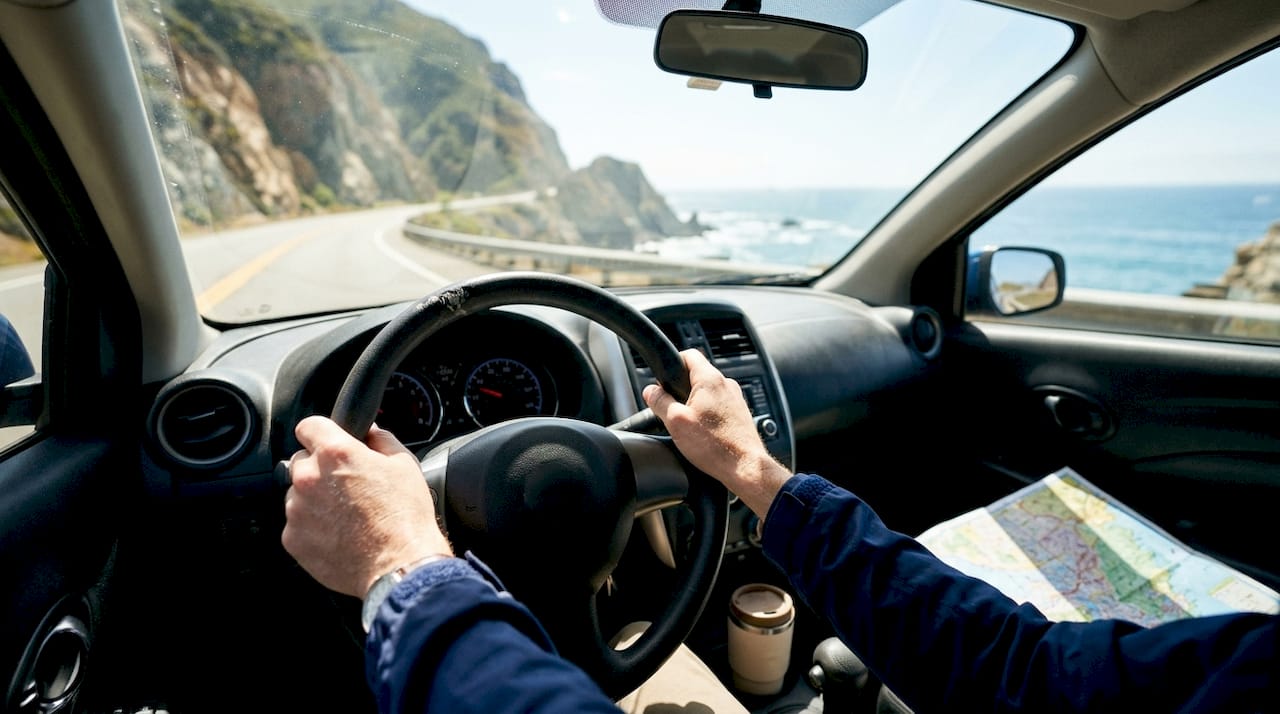
This level of control does more than just feel liberating. It actively builds faster decision-making skills and greater self-reliance. When you navigate an unfamiliar road, find your own accommodation, or choose between two equally appealing detours, you are practising real-time problem-solving. These skills compound over the course of a trip, making each day feel more confident than the last.
The contrast with group or destination holidays is stark. A fixed-destination holiday optimises for the endpoint. A road trip optimises for the entire experience. Every hour of driving, every unplanned village stop, and every wrong turn becomes part of the story rather than an inconvenience.
- Full schedule control with no group compromise
- Spontaneous route changes at any moment
- Faster development of navigation and decision-making skills
- Access to locations that fixed itineraries never reach
- Freedom to extend or shorten any leg of the journey
Pro Tip: Write down three loose “anchor points” before you leave, such as a national park, a coastal town, and a city. Leave everything between them open. This gives structure without killing spontaneity.
What are the financial and practical advantages of road trips?
Road-based travel cuts costs by combining transport and accommodation into a single, flexible system. You are not paying for a return flight and a hotel room simultaneously. Instead, your vehicle carries you and, if you choose, serves as your base. Even without camping, the ability to drive to less-commercialised areas means you access cheaper accommodation than tourist-saturated city centres offer.
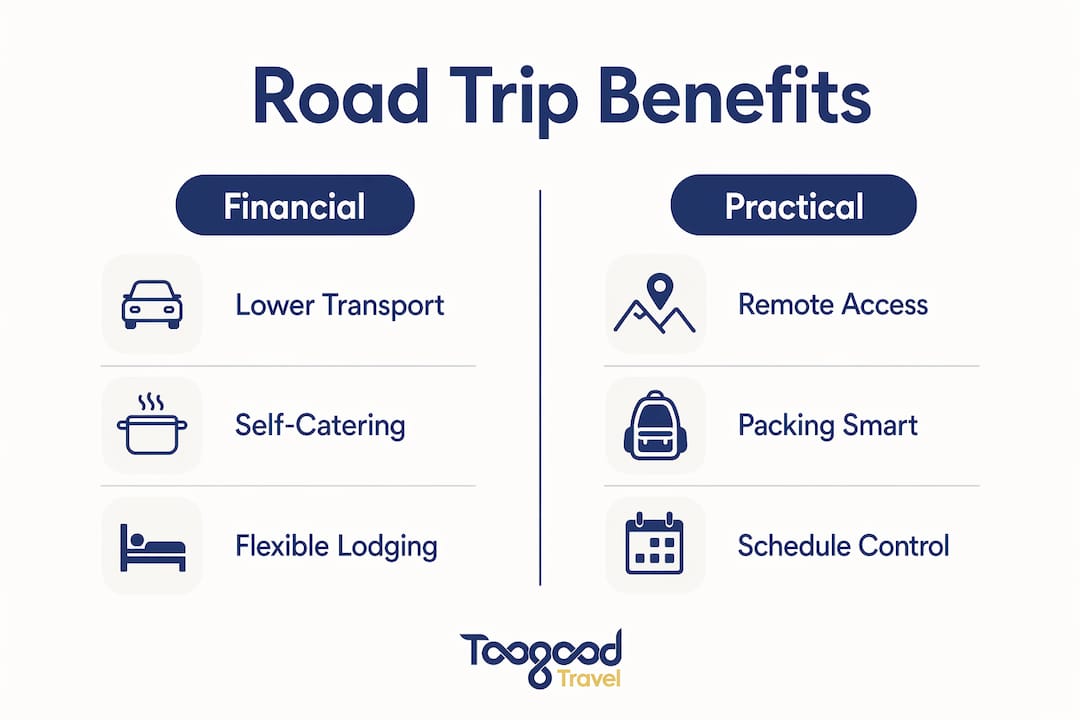
Meal costs drop significantly when you travel by car. You carry a cool box, shop at local supermarkets, and cook at campsites or self-catering stops. Avoiding restaurants for even two meals a day produces meaningful savings over a two-week trip. That money goes back into fuel, experiences, or extending the journey.
Remote and off-grid locations become accessible in a way that flights and trains simply cannot replicate. A hire car or your own vehicle reaches mountain villages, coastal headlands, and forest tracks that no scheduled transport serves. These places are also far less expensive than popular tourist hubs, so your budget stretches further the more adventurous your route becomes.
Packing smart amplifies every financial benefit. Reducing your gear load by 20–30% on your first trip cuts fuel consumption and dramatically reduces pack-up time each morning. Lighter loads also reduce vehicle strain, which matters on longer journeys.
| Expense category | Fixed-destination holiday | Road trip |
|---|---|---|
| Transport | Return flights, transfers | Fuel and vehicle costs only |
| Accommodation | Hotel, often pre-booked | Flexible, often cheaper or camping |
| Food | Restaurants most meals | Self-catering possible daily |
| Remote access | Limited by transport links | Unrestricted by route |
Pro Tip: Pack your bag, then remove one third of it before you leave. After your first trip, you will realise you used even less than that.
How do road trips benefit mental health and personal growth?
Road trips stimulate feel-good hormones and create new neural pathways, reducing stress and preventing burnout more effectively than static holidays. The science behind this is straightforward. Constantly changing scenery keeps the brain engaged without overwhelming it. Managing a journey, making small decisions, and adapting to new environments provides the kind of active mindfulness that sitting on a beach for a week rarely delivers.
The shift from a destination mindset to a journey mindset is the most underrated benefit of road travel. Most holidays treat travel as a necessary inconvenience between home and the resort. Road trips invert that entirely. Approaching travel as an adventure rather than a means to an end shifts your entire relationship with the experience. Unexpected detours become highlights. A misread map leads to a viewpoint you would never have found otherwise.
Solo road travellers also report richer social lives on the road than they expected. The vulnerability of travelling alone acts as a catalyst for deeper interactions with locals than traditional tourism ever produces. A unique vehicle, an unusual piece of kit, or simply the fact that you are clearly travelling independently draws people in. These “conversational anchors” create genuine encounters rather than transactional tourist exchanges.
Road trips preserve a form of experiential travel that remains unmatched in fostering authentic discovery. As actor Keegan-Michael Key has observed, the connection between traveller and environment that road travel creates is something modern air travel has almost entirely erased.
Personal growth is a natural by-product of all of this. You learn to read a situation, trust your instincts, and find comfort in uncertainty. Those qualities do not stay on the road. They come home with you.
What are the biggest challenges for independent road travellers, and how do you overcome them?
Decision fatigue is the most common problem independent travellers face in the first days of a road trip. When every choice is yours, the freedom can feel heavy before it feels liberating. Experts recommend planning a loose route initially to acclimatise before embracing full spontaneity. Gradual adaptation reduces overwhelm and lets enjoyment build naturally.
The following steps help first-time independent road travellers get started with confidence:
- Plan anchor points, not a full itinerary. Choose two or three must-see locations and leave the route between them open.
- Start with a shorter trip. A three to five day route builds confidence before you commit to two weeks or more.
- Pack light and refine. Take less than you think you need. After your first trip, you will know exactly what you actually use.
- Build a basic vehicle checklist. Know how to check tyre pressure, top up fluids, and change a tyre. These are simple skills that remove a major source of anxiety.
- Tell someone your loose route. Share your anchor points with a friend or family member before you leave. This is basic safety practice for any solo traveller.
- Carry offline maps. Mobile signal disappears in the most interesting places. Download your route on Google Maps or a dedicated offline app before you set off.
Pro Tip: Book your first night’s accommodation in advance. Arriving somewhere new after a long first day of driving is not the moment to search for a bed. After that, leave the rest flexible.
A first-time traveller checklist can also help you cover the practical basics before you leave, from travel insurance to emergency contacts.
Key takeaways
Road trips suit independent travellers because they deliver full personal control, genuine cost savings, and a depth of experience that fixed-destination holidays cannot match.
| Point | Details |
|---|---|
| Autonomy is the core benefit | Road trips remove group compromise entirely, giving you complete control over route, pace, and stops. |
| Cost savings are real and compounding | Combining transport and accommodation, self-catering, and accessing cheaper remote areas cuts total trip costs significantly. |
| Mental health benefits are evidence-based | Changing scenery and active journey management reduce stress and build mindfulness more effectively than static holidays. |
| Social connection is stronger, not weaker | Travelling independently creates more frequent and deeper interactions with locals than group tourism produces. |
| Start small and build confidence | A three to five day first trip with loose anchor points is the most effective way to begin independent road travel. |
Road trips changed how I think about travel
By Stuart Toogood
I have planned and taken a lot of holidays over the years, and I can say with confidence that nothing has shaped my understanding of travel quite like a road trip. The first time I drove without a fixed plan, I spent the first day slightly anxious and the second day completely free. That shift happens faster than you expect.
What strikes me most is how road trips expose the difference between visiting a place and experiencing it. You can fly into a city, tick off the sights, and fly home. You will have been there. A road trip forces you to slow down, take the wrong exit, and end up somewhere you had never heard of. That is where the real memories live.
I also think the solo road trip is one of the most underrated formats for personal development. The decisions you make on the road, from navigating a mountain pass to finding a meal in a village with no English menus, build a kind of quiet confidence that transfers directly to everyday life. You come back different, in the best possible way.
My advice to anyone considering their first independent road trip is simple: start smaller than you think you need to. A long weekend is enough to feel the freedom. Once you have tasted it, you will plan the longer trip yourself.
— Stuart Toogood
Planning your next independent adventure with Toogood Travel
Independent travel thrives when you have the right inspiration and the right support behind you. Whether you are mapping out a fly-drive through the American South, a coastal route along the Amalfi Coast, or something entirely off the beaten track, Toogood Travel has the resources to help you plan it well.
From adventure travel options to unique experiences like poker holidays that combine the thrill of travel with something genuinely different, Toogood Travel covers the full spectrum of independent and experiential travel. Browse the full collection, get inspired, and find the trip that fits the way you want to travel. The road is waiting.
FAQ
Why do road trips suit independent travellers so well?
Road trips give independent travellers complete control over their route, schedule, and stops without group compromise. That autonomy is the defining advantage over package tours or fixed-destination holidays.
Are road trips cheaper than traditional holidays?
Road trips reduce costs by combining transport and accommodation, enabling self-catering, and accessing cheaper remote locations. The savings grow the longer and more flexible the trip becomes.
How do road trips benefit mental health?
Road trips stimulate feel-good hormones and create new neural pathways, reducing stress more effectively than static holidays. Constantly changing scenery provides active mindfulness that passive beach holidays rarely deliver.
Is solo road travel safe?
Solo road travel is safe with basic preparation. Share your loose route with someone at home, carry offline maps, know basic vehicle checks, and book your first night in advance to reduce first-day pressure.
How long should a first road trip be?
A three to five day trip is the ideal length for a first independent road trip. It builds confidence and decision-making skills without the pressure of a longer commitment, making the next trip easier to plan.
