
TL;DR:
- Travel documentaries significantly influence holiday planning by creating emotional and cultural connections to destinations. They encourage longer, more immersive trips and foster respectful, authentic travel experiences based on sincerity and local culture. Viewers often act on documentary inspiration, increasing interest and tourism in featured locations.
Travel documentaries are immersive visual narratives that directly influence holiday planning by connecting viewers emotionally to destinations they have never visited. Research confirms that 72% of travellers are influenced in their holiday planning by travel-related screen content. That figure is not a marginal effect. It means the majority of holiday decisions now have a screen somewhere in their origin story. The role of travel documentaries in inspiring holidays extends far beyond passive entertainment. These films educate, provoke curiosity, and build the kind of emotional investment that turns a vague wish into a booked flight.
How do travel documentaries emotionally engage audiences to inspire travel?
Emotional connection is the engine behind documentary-driven travel inspiration. A study of 403 respondents confirmed that inspiration acts as a critical emotional mediator triggering travel planning, with sincerity, professionalism, and humour identified as the key triggers. This means the personality of the presenter or participant matters far more than the production budget or the beauty of the scenery alone.
Research shows that the success of travel documentaries depends more on the perceived sincerity and humour of participants than on their physical attractiveness. Viewers build trust with people who feel genuine. That trust transfers directly to the destination being featured.
The emotional mechanisms at work include:
- Curiosity. A documentary that shows a local market in Marrakech or a fishing village in Vietnam sparks a desire to experience those sights, sounds, and smells firsthand.
- Humour. Presenters who laugh at themselves or find joy in awkward cultural moments make destinations feel approachable rather than intimidating.
- Sincerity. Honest storytelling about a place, including its challenges, builds credibility and makes the inspiration feel earned rather than manufactured.
- Professionalism. Well-researched content signals to viewers that the destination is worth serious consideration.
Pro Tip: When selecting a documentary to watch before a trip, prioritise those where the presenter visibly connects with local people rather than simply narrating scenery. That human connection is what translates into genuine travel motivation.
Do travel documentaries educate viewers about local culture?
Travel documentaries on digital platforms act as informal cultural education, documenting festivals, dances, art forms, and traditions that most travellers would never encounter through a standard holiday brochure. This educational function is one of the most underappreciated benefits of watching travel shows. It builds cultural literacy before you even pack a bag.
The cultural elements most commonly showcased in quality travel documentaries include:
- Local festivals and ceremonies. Documentaries covering events such as Japan’s Obon festival or India’s Holi celebrations give viewers context that transforms a sightseeing stop into a meaningful cultural moment.
- Traditional food preparation. Watching a family in Oaxaca make mole from scratch, or a fisherman in Sri Lanka prepare a beach curry, creates a sensory connection that no written guide replicates.
- Indigenous arts and crafts. Programmes that follow artisans in Bali, Peru, or Morocco reveal the human stories behind the souvenirs, encouraging more thoughtful purchasing.
- Language and social customs. Even brief exposure to greetings, gestures, and etiquette norms reduces the anxiety of arriving somewhere unfamiliar.
- Environmental and ecological context. Documentaries covering the Great Barrier Reef, the Amazon, or the Serengeti teach viewers why these places are fragile, which shapes more respectful behaviour on arrival.
This informal education also acts as a form of digital preservation. When a documentary captures a dying craft or a shrinking community festival, it creates a record that outlasts the tradition itself. Viewers who watch these films often arrive at a destination with a deeper sense of responsibility toward the culture they are visiting.
Pro Tip: Watch at least one documentary focused specifically on the culture or history of your destination, not just its landscapes. You will ask better questions, find better experiences, and leave with a richer understanding of where you have been.
What is the impact of travel documentaries on travel trends and destination choices?
The impact of travel documentaries on travel trends is measurable and, in some cases, dramatic. Approximately 50% of overseas visitors to Iceland cite television programmes, films, or documentaries as a factor in their decision to travel there. Iceland is a striking case study because its tourism growth has been closely tracked alongside its screen appearances.
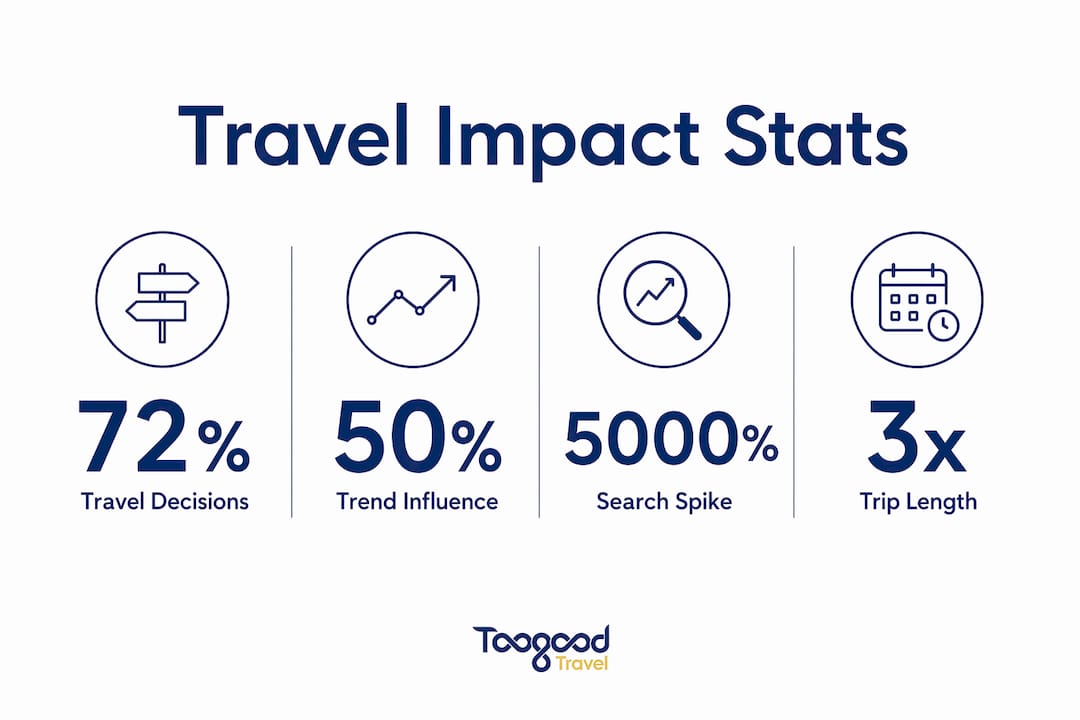
The most vivid data point from Iceland is this: online searches for the Icelandic waterfall Háafoss increased by 5,000% after it appeared in a major streaming series viewed by over 100 million people. That is not a gradual trend. It is a near-instant redirection of global travel interest triggered by a single screen appearance.
The table below compares how documentary-driven travel interest differs from blockbuster film tourism:
| Factor | Documentary-driven travel | Blockbuster film tourism |
|---|---|---|
| Speed of impact | Gradual, builds over weeks and months | Rapid spike immediately after release |
| Type of traveller attracted | Culturally curious, longer stays | Broad audience, often short visits |
| Depth of engagement | Immersive, seeks authentic experiences | Often focused on specific filming locations |
| Duration of interest | Sustained over years | Typically fades within months |
| Effect on local economy | Supports local businesses and guides | Can concentrate spending at single sites |
Documentaries build trust and nuance over months or years of production. This is why they encourage longer, more immersive stays rather than the mass short-term sightseeing influx that blockbuster films often generate. A viewer who has spent three hours watching a documentary series about Vietnam’s Mekong Delta arrives wanting to hire a local guide, eat at family-run restaurants, and stay for two weeks. A viewer who watched a film set in Ha Long Bay may simply want a photograph at the same viewpoint.
Key patterns in documentary-driven travel behaviour include:
- Travellers seek out lesser-known regions rather than capital cities alone.
- Bookings for cultural tours and food experiences increase alongside documentary viewership.
- Travellers are more likely to plan their first trip abroad after watching a documentary series about an unfamiliar region.
How can you use travel documentaries to plan a responsible holiday?
Translating cinematic inspiration into a real itinerary requires honesty about what you are actually seeing on screen. Travellers often misjudge travel time seen on screen. Realistic itineraries recommend focusing on two anchor experiences inspired by the documentary rather than attempting full replication of everything shown. A presenter who moves from Kyoto to Osaka to Hiroshima in a single episode has a film crew, a fixer, and no luggage restrictions. You do not.
Responsible use of documentary inspiration involves:
- Choosing anchor experiences. Identify the one or two moments from the documentary that genuinely moved you. Build your itinerary around those, and let everything else be a bonus.
- Researching the reality. A documentary may show a beach at dawn with no other visitors. That beach may now attract hundreds of tourists daily. Check current visitor numbers before committing.
- Supporting local communities. Documentaries that feature local guides, family-run guesthouses, or artisan workshops are signposting exactly where your spending will have the most positive impact.
- Respecting cultural context. If a documentary shows a sacred ceremony, that does not mean it is open to tourists. Research access and etiquette before you arrive.
- Avoiding romanticised hardship. Responsible storytelling prevents the romanticisation of poverty or hardship as a travel aesthetic. Visiting a community because it looks “authentically poor” on screen is not cultural appreciation.
Experienced travellers take documentary inspiration one step further by matching the music from a destination’s documentary to a personal playlist for the trip. This sensory layering, pairing the soundtrack of a destination with the physical experience of being there, deepens the emotional connection and makes the holiday feel more intentional.
Pro Tip: Before booking, watch a documentary about your destination and write down three specific experiences it inspired. Use those three experiences as the non-negotiable anchors of your itinerary. Everything else can flex around them.
Key takeaways
Travel documentaries are the single most influential form of screen content in shaping holiday decisions, combining emotional storytelling, cultural education, and measurable destination impact.
| Point | Details |
|---|---|
| Documentaries drive most travel decisions | Research shows 72% of travellers are influenced by travel-related screen content when planning holidays. |
| Sincerity and humour inspire action | Viewers trust and are motivated by presenters who feel genuine, not just destinations that look beautiful. |
| Cultural education shapes better travellers | Documentaries teach local customs, festivals, and etiquette, leading to more respectful and rewarding trips. |
| Documentary tourism runs deeper than film tourism | Screen-inspired travellers stay longer, spend more locally, and seek authentic experiences over photo opportunities. |
| Anchor experiences prevent over-ambitious itineraries | Focus on two or three documentary-inspired moments rather than replicating an entire series in one trip. |
Why I think travel documentaries are the most honest form of travel inspiration
I have been helping people plan holidays for a long time, and I have watched the way inspiration works change completely. Brochures used to do the heavy lifting. Now it is a documentary series watched on a Sunday evening that sends someone into our inbox on Monday morning asking about Vietnam or Patagonia or the Norwegian fjords.
What strikes me most is the quality of the traveller that documentary inspiration produces. These are not people who want to tick off a list of landmarks. They want to eat what they saw on screen, meet the kind of people the presenter met, and understand why a place feels the way it does. That makes for a far more satisfying holiday, and it makes our job more interesting too.
The one thing I always caution against is the compressed timeline problem. A six-part documentary series covers months of travel. Trying to replicate it in ten days leads to exhaustion and disappointment. The best approach is to pick the two or three moments that genuinely stopped you in your tracks and build a realistic trip around those. The rest of the series can wait for a return visit.
I also think the shift to digital platforms has been genuinely positive for travel culture. Documentaries that would once have reached a small audience on a specialist channel now reach millions. That exposure is creating a generation of travellers who arrive somewhere with genuine curiosity rather than just a camera. That is a good thing for destinations, for local communities, and for the travellers themselves.
— Stuart Toogood
Turn your documentary inspiration into a real holiday with Toogood Travel
You have watched the series, felt the pull of a destination, and started imagining yourself there. That is exactly the right moment to talk to someone who can make it happen.

Toogood Travel specialises in bespoke holidays built around what genuinely excites you, whether that is a cultural immersion trip through Southeast Asia, a wildlife adventure in East Africa, or a city break inspired by a food documentary. The team at Toogood Travel takes your inspiration and turns it into a realistic, well-planned itinerary that delivers the experiences you actually want. From worldwide adventure holidays to more specialist breaks, there is a holiday waiting to match your screen-inspired curiosity. Get in touch and let’s build it together.
FAQ
How do travel documentaries influence holiday choices?
Travel documentaries influence holiday choices by creating emotional connections to destinations through storytelling, cultural insight, and participant sincerity. Research confirms that 72% of travellers are influenced by travel-related screen content when planning their holidays.
Why do documentaries inspire longer trips than blockbuster films?
Documentaries build trust and nuance over extended production periods, which encourages viewers to seek immersive, longer stays rather than brief visits to filming locations. Blockbuster film tourism typically generates a rapid but short-lived spike in interest at specific sites.
What is the best way to plan a holiday inspired by a documentary?
Focus on two anchor experiences from the documentary that genuinely moved you, then build a realistic itinerary around those moments. Avoid trying to replicate an entire series in a single trip, as on-screen travel timelines rarely reflect real-world logistics.
Can travel documentaries help you understand local culture before you travel?
Travel documentaries act as informal cultural education, covering festivals, food traditions, arts, and social customs that prepare viewers for respectful and meaningful travel. This preparation leads to richer experiences and more considerate behaviour on arrival.
Do travel documentaries have a measurable effect on tourism numbers?
The effect can be dramatic. Online searches for the Icelandic waterfall Háafoss increased by 5,000% after it appeared in a major streaming series, and approximately 50% of overseas visitors to Iceland cite screen content as a factor in their decision to visit.
