
The Caribbean hurricane season officially runs from 1 June to 30 November, and if you’re planning a holiday in the region during those months, understanding the risk is far more useful than avoiding the topic altogether. Peak activity is concentrated between mid-August and October, with September sitting at the statistical heart of the season. The good news? The Caribbean is a vast and geographically varied region, and not every island carries the same level of risk.
Here’s what UK travellers need to know at a glance:
- ️ Official season: 1 June to 30 November
- ⚠️ Peak risk window: Mid-August through October
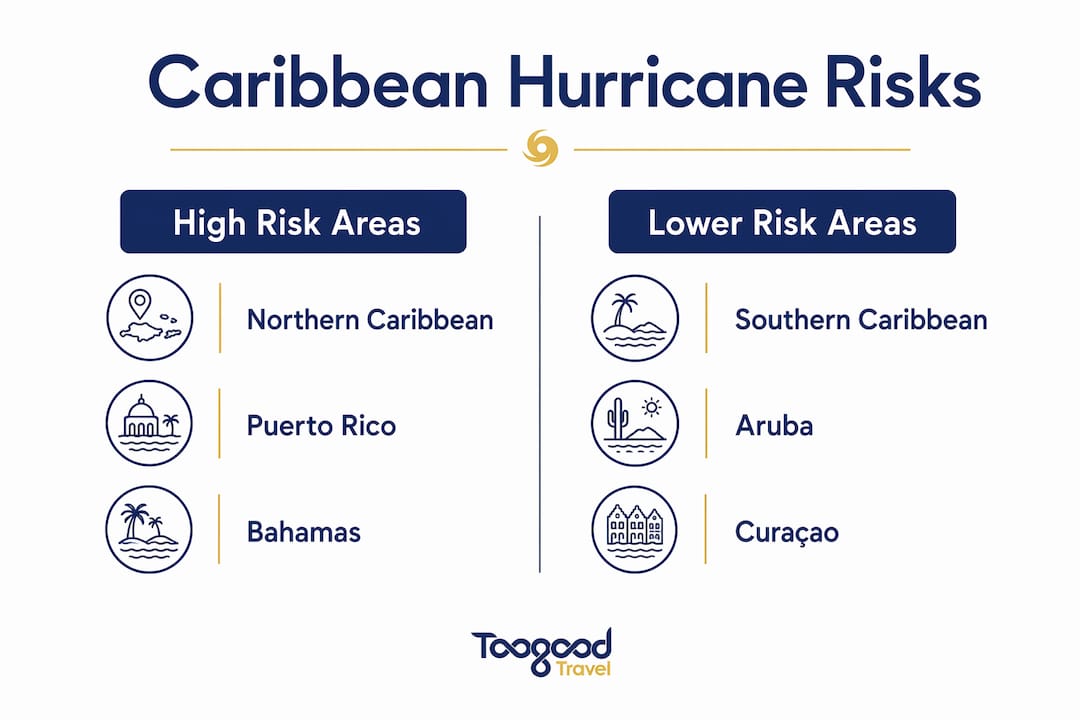
- Highest risk: Northern Caribbean (Puerto Rico, Dominican Republic, Jamaica, the Bahamas)
- ✅ Lower risk: Southern Caribbean (Aruba, Bonaire, Curaçao, Trinidad and Tobago)
- Statistical peak day: early September
- ️ Key bodies to monitor: US National Hurricane Center (NHC), UK Met Office, and FCDO travel advice
- Insurance note: The Association of British Insurers advises that standard policies cover medical emergencies, but weather disruption often requires a specific add-on
The entire season is not equally dangerous, and millions of Caribbean holidays go ahead without a single disruption. Smart planning, the right island choice, and proper insurance make all the difference.
When and where does the Caribbean hurricane season actually strike?
The Atlantic hurricane season runs from 1 June to 30 November, but those dates are bookends rather than a forecast. The first six weeks and the final six weeks of the season tend to be relatively calm. Most Atlantic hurricanes form between mid-August and mid-October, with early September as the statistical peak.
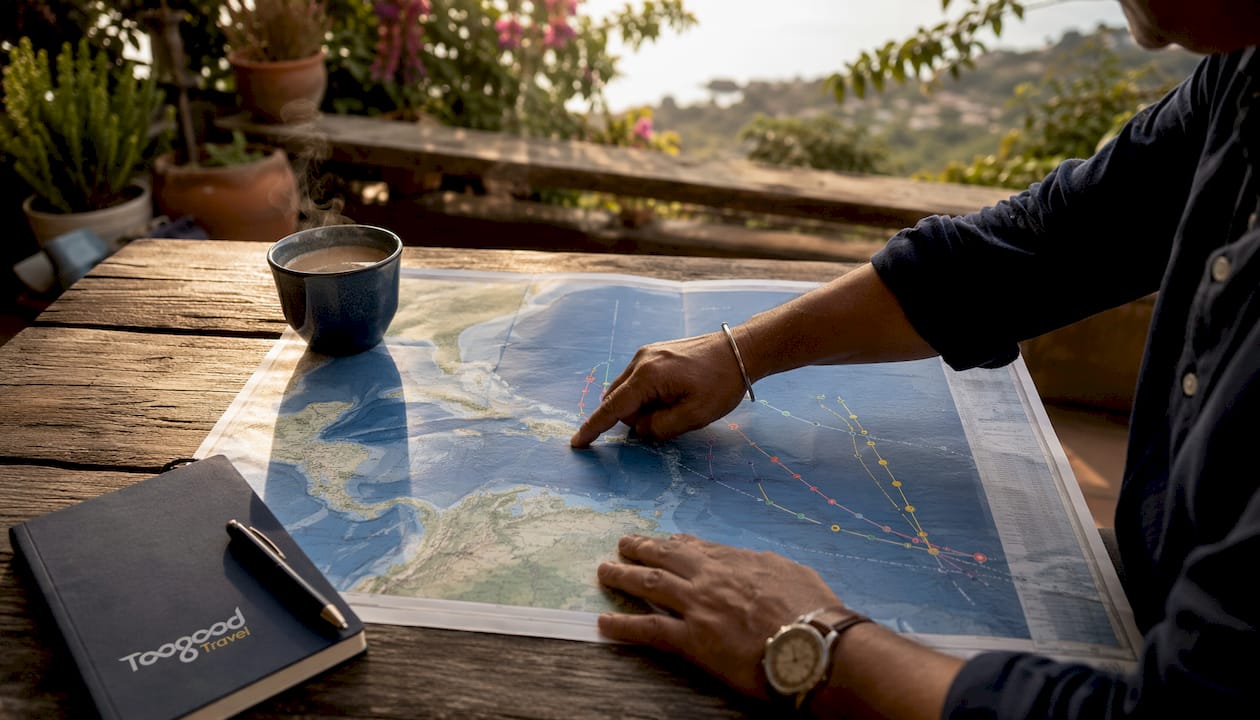
Geography shapes risk just as much as timing. Tropical storms typically form off the West African coast, track westward across the Atlantic, and curve northward as they approach the Caribbean. That pattern means the northern Caribbean absorbs the brunt of most seasons.
Caribbean hurricane risk by region:
| Region | Islands | Hurricane risk level |
|---|---|---|
| Northern Caribbean | Puerto Rico, Dominican Republic, Haiti, Cuba, the Bahamas | High |
| Eastern Caribbean | Barbados, St Lucia, Antigua, Martinique | Moderate |
| Western Caribbean | Jamaica, Cayman Islands, Belize | Moderate to high |
| Southern Caribbean | Aruba, Bonaire, Curaçao, Trinidad and Tobago | Low |
Climate phenomena also play a role. El Niño conditions tend to suppress hurricane formation in the Caribbean by increasing wind shear, which disrupts storm development. La Niña years, by contrast, often produce more active seasons. The UK Met Office issues seasonal forecasts each year, but these give a general picture of activity levels rather than predicting individual storms.
A typical hurricane forms over warm ocean water, intensifies over several days, and can maintain strength for one to three weeks before weakening over land or cooler water. The lifecycle varies enormously, which is precisely why real-time tracking matters more than any seasonal forecast.
Months at a glance:
- June and July: Low activity, good value, pleasant weather on most islands
- August and September: Highest risk, deepest discounts, most flexibility required
- October: Risk tapering but still present, prices remain low
- November: Storm activity fades, excellent value, weather improving across the region
How does hurricane season affect your travel plans and safety?
Hurricanes can disrupt Caribbean holidays in ways that go well beyond a rainy afternoon. Airports close, flights are cancelled or rerouted, hotels may shut temporarily, and road infrastructure can be damaged for days or weeks after a major storm passes. The northern Caribbean islands are most exposed to these disruptions, particularly during August and September.
For UK travellers, the practical implications are worth understanding before you book:
- ✈️ Flights: Airlines may cancel or reroute services at short notice when a storm threatens. Flexible fares give you options; non-refundable tickets can mean a total loss.
- Accommodation: Hotels in hurricane-prone areas typically have evacuation procedures, but some may close temporarily for safety or repairs.
- Local transport: Roads, bridges, and ferry services can be disrupted for days after a storm, affecting excursions and inter-island travel.
- Medical services: Hospitals and clinics in smaller islands may face capacity issues following a major storm.
- Cruises: Ships reroute itineraries to avoid storms, which can mean missing planned ports of call. Our cruise planning guide covers how to prepare for exactly this kind of disruption.
If a hurricane threatens your location, follow the advice of local authorities without delay. Evacuate if instructed to do so. Register with the local British Embassy or High Commission on arrival, and keep the FCDO travel advice page for your destination bookmarked on your phone.
Pro Tip: Book refundable or flexible fares wherever possible during hurricane season months, and check your accommodation’s cancellation policy before confirming. A small premium for flexibility can save you thousands if a storm forces a change of plans.
Which Caribbean islands are safer to visit during hurricane season?
Not all Caribbean islands face the same level of storm risk, and choosing the right destination can transform a potentially stressful trip into a genuinely relaxing one. The southern Caribbean sits largely outside the main hurricane belt, making it a strong choice for travellers who want to travel during the season without the anxiety.
Lower-risk islands worth considering:
Aruba: Consistently sunny, arid, and historically less affected by direct hurricane hits. Aruba sits roughly 15 miles off the Venezuelan coast, well south of the typical storm track. It’s one of the most reliable Caribbean destinations year-round.
Bonaire: Famous for diving, Bonaire shares Aruba’s favourable geography and rarely sees significant storm activity. Quieter and less developed than its ABC island neighbours.
Curaçao: Colourful, culturally rich, and sheltered by its southerly position. Curaçao offers a lively mix of Dutch colonial architecture, beaches, and excellent snorkelling with very low hurricane risk.
Trinidad and Tobago: Sitting close to the South American coast, Trinidad and Tobago is rarely affected by hurricanes, though severe storms can still occur. Tobago in particular offers beautiful beaches and a relaxed atmosphere.
Barbados: Further east than most Caribbean islands and at the southern edge of the hurricane belt. Barbados sees far fewer direct hits than the northern islands, though it can still experience tropical weather during peak months.
Islands in the northern Caribbean, including Jamaica, Puerto Rico, the Dominican Republic, and the Bahamas, carry a higher risk during August and September. That doesn’t mean you should rule them out entirely. It does mean you should book with maximum flexibility, take out comprehensive insurance, and monitor forecasts closely in the weeks before departure.
Weather on the safer southern islands during hurricane season is typically warm and sunny, with occasional afternoon showers. The trade winds keep temperatures comfortable, and the beaches are far less crowded than during peak winter months.
What travel insurance do you need for a Caribbean holiday in hurricane season?
Travel insurance is the single most important piece of preparation for any Caribbean holiday booked during storm season, and the detail in your policy matters enormously. Standard travel insurance is primarily designed to cover emergency medical treatment and repatriation costs, which can run into tens or even hundreds of thousands of pounds. Weather disruption, including trip cancellation due to a hurricane, is typically excluded unless you purchase a specific add-on.
The Association of British Insurers is clear on this point: if you are injured or fall ill due to an extreme weather event, your policy covers you in the usual way. But if a hurricane simply prevents you from travelling or forces you to cut your holiday short, you need additional cover.
Insurance checklist for hurricane season travel:
- ✅ Confirm the policy covers emergency medical treatment and repatriation
- ✅ Check whether trip cancellation due to named storms is included or available as an add-on
- ✅ Look for cover for travel delays and missed connections caused by weather
- ✅ Verify evacuation cover if you’re visiting a lower-lying or remote island
- ✅ Read the small print on “known events” clauses — many policies won’t cover a storm that has already been named at the time of purchase
- ✅ Purchase your policy as soon as you pay your deposit, not as an afterthought before departure
Timing your insurance purchase is critical. Buying coverage early after placing your deposit maximises the likelihood that storm-related cancellations are eligible under your policy. Waiting until a storm is already named and in the news is almost always too late.
Pro Tip: When comparing policies, look specifically for “natural disaster” or “weather disruption” cover as a named feature, not just emergency medical. The Association of British Insurers recommends checking your policy scope carefully and speaking directly to your insurer if anything is unclear.
Practical tips for planning a Caribbean trip during storm season
Planning a Caribbean holiday during hurricane season is genuinely achievable with the right approach. The key is stacking the odds in your favour through timing, flexibility, and preparation rather than simply hoping for the best.
Smart planning actions:
- Time your trip wisely: June, July, late October, and November offer lower prices with significantly reduced storm risk compared to August and September.
- ️ Choose your island carefully: Southern Caribbean destinations like Aruba, Bonaire, and Curaçao carry far lower risk than northern islands during peak months.
- Book flexible fares: Opt for refundable flights and accommodation where possible. The small extra cost is worth it during storm season.
- Monitor real-time forecasts: The US National Hurricane Center provides the most authoritative real-time storm tracking. The UK Met Office seasonal forecast gives a broader picture of likely activity levels.
- Register with the FCDO: Register your trip at the British Embassy or High Commission in your destination country so you can be contacted quickly if the situation changes.
- Know your hotel’s evacuation plan: Ask your accommodation about their hurricane procedures before you arrive, not after a storm warning is issued.
- Avoid social media for storm updates: Official advisories from the NHC and FCDO provide far more reliable timelines and risk assessments than social media speculation.
For travellers who want complete peace of mind, the holiday protection options available through Toogood Travel include flexible booking arrangements designed to give you breathing room if forecasts shift before departure.
Pro Tip: Book your travel insurance the same day you pay your holiday deposit. Policies purchased before a storm is named offer far broader protection than those bought once a system is already developing.
Ready to plan your Caribbean escape?
Whether you’re dreaming of the sun-drenched beaches of Aruba, the vibrant culture of Barbados, or the lush landscapes of St Lucia, Toogood Travel can help you plan a Caribbean holiday that works around the season rather than against it. We specialise in bespoke itineraries, flexible booking options, and genuinely personal service, so you travel with confidence whatever the forecast. Explore Caribbean holidays with Toogood Travel and let us take care of the details.
Key takeaways
The Caribbean hurricane season runs from 1 June to 30 November, but the genuine danger window is narrower, concentrated between mid-August and mid-October, and varies significantly by island.
| Point | Details |
|---|---|
| Official season dates | Hurricane season runs from 1 June to 30 November across the Caribbean region. |
| Peak risk window | Most Atlantic hurricanes form between mid-August and mid-October, with early September as the statistical peak. |
| Safer island choices | Southern Caribbean islands like Aruba, Bonaire, and Curaçao sit outside the main hurricane belt and are historically less affected. |
| Insurance is essential | Standard policies cover medical emergencies; weather disruption cover requires a specific add-on purchased before a storm is named. |
| Flexibility is your best protection | Refundable fares, early insurance purchase, and real-time monitoring from the US National Hurricane Center reduce your risk considerably. |
FAQ
What months should you avoid in the Caribbean?
Mid-August through October carries the highest storm risk, with 10 September as the statistical peak. If you want to minimise disruption, June, July, late October, and November offer much lower risk while still benefiting from off-peak pricing.
Which Caribbean islands are outside the hurricane belt?
Aruba, Bonaire, and Curaçao sit well south of the typical storm track and are historically less affected by direct hurricane hits. Trinidad and Tobago and Barbados also sit at the southern edge of the belt and rarely experience direct strikes.
Which Caribbean island is the safest from hurricanes?
Aruba is widely considered the most reliably safe Caribbean island during hurricane season. Its position roughly 15 miles off the Venezuelan coast places it outside the main storm track, and it has experienced very few direct hurricane hits in recorded history.
Which Caribbean island gets hit by hurricanes most often?
The northern Caribbean islands, particularly Puerto Rico, the Dominican Republic, Haiti, Cuba, and the Bahamas, experience the most frequent hurricane activity. Storms tracking westward across the Atlantic tend to curve northward through this zone, making it the most exposed part of the region.