
TL;DR:
- Thorough destination research before booking is essential for a personalized and successful trip. Combining multiple sources like AI tools, official advisories, forums, and social media provides a balanced view of each destination. Most travelers should first confirm flights, then secure accommodations and plan activities with clear priorities in mind.
Destination research is the foundation of any well-planned trip. Before you book a single flight or hotel, understanding your destination shapes every decision that follows, from budget to packing to daily itinerary. 60% of informed travellers now use AI tools alongside search engines to research worldwide destinations for travel planning, a shift that has transformed how people discover and evaluate places to visit. Safety considerations, visa requirements, seasonal timing, and emerging destination trends all feed into the research process. Get this stage right, and the rest of your planning falls into place naturally.
How to use online tools to research global travel destinations
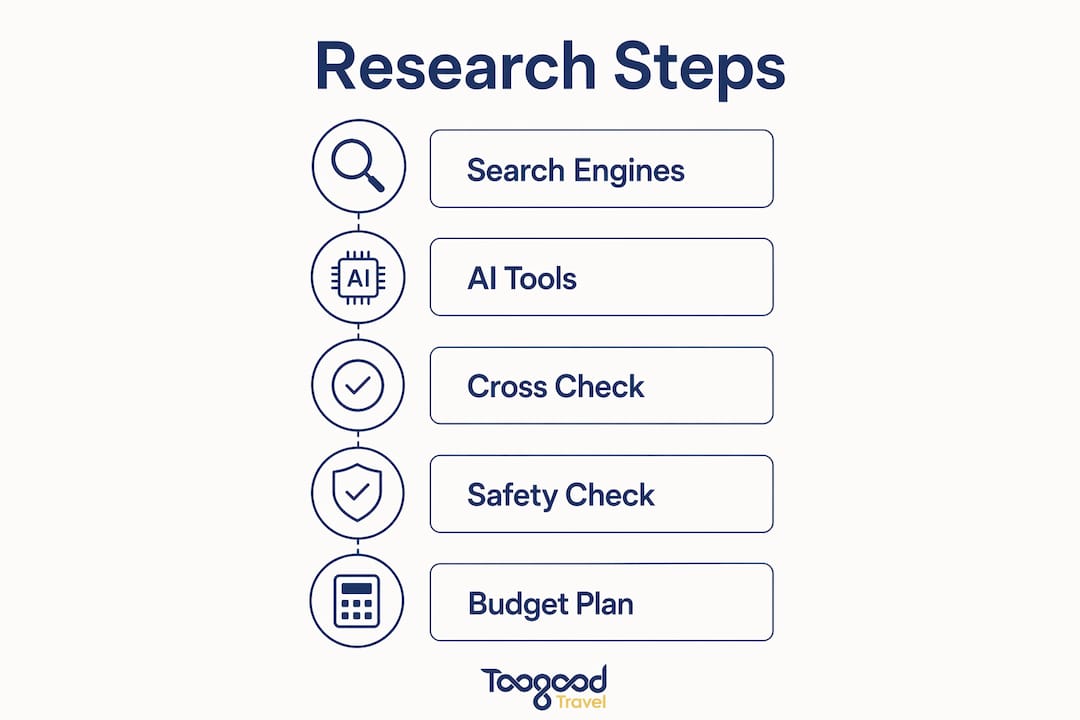
Search engines remain the dominant starting point for destination discovery. A simple query about Thailand, Iceland, or the Maldives returns thousands of results, but the real skill lies in knowing which sources to trust and how to combine them effectively.

AI travel planning tools have changed the game considerably. AI tools assist with itinerary generation, destination comparison, and answering specific questions about visa rules or local customs. They work best when you treat them as a starting point rather than a final authority. Always cross-reference AI suggestions with official tourism boards, government travel advisories, and recent traveller accounts.
Social media platforms like Instagram and YouTube offer real-time visual inspiration and honest traveller perspectives. A short video of a beach in Krabi or a street food market in Hanoi tells you more about atmosphere than any brochure. Travel guides and online forums remain highly valued for in-depth destination information that goes beyond surface-level discovery.
The most effective approach combines multiple source types:
- Search engines for broad discovery and destination shortlisting
- AI planning tools for itinerary drafts and quick factual queries
- Official tourism websites for accurate visa, entry, and health requirements
- Travel forums such as TripAdvisor communities for candid, recent traveller reviews
- Social media for atmosphere, visual inspiration, and up-to-date local insights
Pro Tip: Cross-reference at least three source types before committing to a destination. A place that looks stunning on Instagram may have significant practical challenges that only a forum post or official advisory will reveal.
What critical factors should you research before choosing a destination?
Choosing a destination involves far more than picking somewhere that looks beautiful. Several practical factors determine whether a trip will be enjoyable, affordable, and safe.
Safety and geopolitical stability top the list for most travellers. 72% of global travellers cite geopolitical instability as a concern affecting their travel decisions, while 66% worry about personal safety. Checking the UK Foreign, Commonwealth and Development Office (FCDO) travel advisories before committing to any destination is non-negotiable.
Seasonality and timing directly affect your experience and your budget. Visiting Japan during cherry blossom season or Europe over Christmas requires booking 3–4 months ahead to secure reasonable prices and availability. Travelling in shoulder season often delivers better value and fewer crowds without sacrificing good weather.
Visa requirements and border policies vary enormously by destination and nationality. Some countries offer visa-free entry for UK passport holders; others require advance applications, fees, or specific documentation. Research this early, as visa processing times can affect your entire booking timeline.
Budget and affordability shape destination choice more than many travellers admit. Over 60% of travellers prioritise travel by adjusting their plans rather than cancelling, whether that means choosing a different destination, travelling off-peak, or restructuring their itinerary. This flexibility is a genuine planning advantage.
Emerging versus traditional destinations offer a compelling choice. Destinations like Brazil, Ethiopia, and Bhutan are growing rapidly as travellers seek experiences beyond the well-worn European circuit. Bhutan charges a Sustainable Development Fee to fund local infrastructure while managing tourist numbers, making it a thoughtful choice for travellers who want to explore responsibly.
| Factor | Why it matters | Key action |
|---|---|---|
| Safety and stability | Affects trip viability and insurance | Check FCDO advisories before booking |
| Seasonality | Impacts weather, crowds, and cost | Research peak and shoulder seasons |
| Visa requirements | Can delay or prevent travel | Confirm entry rules at least 3 months ahead |
| Budget and affordability | Shapes destination and trip structure | Compare daily costs across shortlisted destinations |
| Emerging destinations | Offer unique experiences with fewer crowds | Research sustainable tourism fees and local infrastructure |
How to plan your trip once you’ve chosen a destination
Turning destination research into a workable travel plan requires a clear sequence. Skipping steps or working in the wrong order creates avoidable problems with cost, availability, and logistics.
Book flights first. Locking down flights creates fixed dates that all other planning follows. Building accommodation and activities around confirmed flights prevents price increases and availability gaps that arise when you approach bookings in the wrong order.
Confirm accommodation next. Once your travel dates are fixed, secure your first and last nights immediately. These are the most logistically critical nights of any trip. Mid-trip accommodation can be more flexible, particularly if you plan to move between locations.
Structure activities around your energy, not just your interests. Limiting yourself to 2–3 sights per day prevents the burnout that ruins otherwise excellent trips. Reserve one intensive activity per day at most, and leave unscheduled blocks for spontaneous discoveries. The best travel memories often come from unplanned moments.
Build in flexible scheduling blocks. A rigid itinerary with every hour accounted for leaves no room for weather changes, local recommendations, or simply lingering somewhere wonderful. Aim for a loose structure rather than a minute-by-minute plan.
Answer five key readiness questions before you book. You’re ready to commit when you can clearly answer: where you’re going, your travel dates and duration, your budget range, your top two or three priorities for the trip, and where you’ll sleep on the first night. These five answers eliminate decision paralysis and signal that your research is complete.
Pro Tip: For peak-season destinations like Las Vegas during major events or Japan during cherry blossom, check booking timing advice early. Waiting too long on popular dates costs significantly more and limits your choices.
Common travel planning mistakes and how to avoid them
Even experienced travellers fall into predictable traps. Knowing these pitfalls in advance saves time, money, and frustration.
Booking accommodation before flights. This is the single most common planning error. Accommodation booked before flights are confirmed often cannot be changed without penalties, and flight availability may not align with your chosen dates. Always secure flights first.
Overloading the daily itinerary. Packing six attractions into a single day sounds exciting during planning but leads to exhaustion on the ground. Fatigue is the fastest way to stop enjoying a trip you have spent months anticipating.
Neglecting travel advisories. 51% of travellers reconsider destinations because of travel advisories, yet many check these only once during initial research. Advisories change. Check them again within two weeks of departure.
Ignoring currency and local payment norms. Some destinations are largely cash-based; others are almost entirely card-friendly. Arriving in a cash-heavy destination like Vietnam or Cambodia without local currency creates immediate, avoidable stress.
Overlooking emerging destinations. Sticking exclusively to well-known spots means missing some of the most rewarding travel experiences available. Destinations growing in popularity, such as those in East Africa and South-East Asia beyond the main tourist hubs, often deliver richer cultural experiences at lower cost. For inspiration on destinations worth considering, a broader shortlist always pays off.
Key takeaways
Thorough destination research, completed before any booking is made, is the single most effective way to plan a personalised, enriching trip anywhere in the world.
| Point | Details |
|---|---|
| Research before booking | Complete destination research before committing to flights or accommodation to avoid costly conflicts. |
| Use multiple source types | Combine AI tools, official advisories, forums, and social media for a balanced, accurate picture of any destination. |
| Book flights first | Confirmed flight dates create the fixed framework around which all other logistics should be planned. |
| Limit daily activities | Plan no more than 2–3 activities per day to maintain energy and enjoy the trip fully. |
| Check advisories twice | Review FCDO travel advisories during initial research and again within two weeks of departure. |
Why I think most travellers research too little and plan too fast
There is a pattern I see repeatedly. Travellers spend an evening browsing Instagram, feel inspired by a stunning photograph, and book flights within 48 hours. The destination looks incredible. The trip, however, turns out to be poorly timed, overpriced, or misaligned with what they actually enjoy.
The travel planning process works best when it is split into two distinct phases. The first is pre-commitment research, where you assess whether a destination genuinely suits your interests, budget, and travel style. The second is detailed planning research, where you build the actual trip once you have committed. Most travellers skip the first phase entirely and wonder why the trip did not meet expectations.
I have found that spending even a few focused hours on pre-commitment research changes everything. Reading recent forum posts from travellers with similar interests, checking seasonal weather patterns, and comparing daily costs across two or three shortlisted destinations gives you clarity that no amount of post-booking research can replicate. You arrive knowing what to expect, which means you spend less time adjusting and more time enjoying.
The other thing worth saying plainly: do not let research become a reason to delay. When you can answer those five core questions about where, when, how long, how much, and where you will sleep on night one, you are ready. Stop researching and start booking. The world is genuinely worth exploring, and the best trips belong to those who commit.
— Stuart Toogood
Planning your next trip with Toogood Travel
Whether you are drawn to the vivid street life of Bangkok, the volcanic drama of Iceland, or the turquoise waters of the Maldives, having the right support makes the difference between a good trip and an unforgettable one.

Toogood Travel specialises in creating bespoke holidays tailored to your specific interests, travel style, and budget. From curated itineraries and expert destination advice to flight and accommodation bookings, the team handles the details so you can focus on the excitement of what lies ahead. Whether you are planning a city break, a luxury beach escape, or a multi-centre adventure across several countries, plan your next adventure with Toogood Travel and turn your destination research into a trip worth talking about for years.
FAQ
What is the best way to start researching a travel destination?
Start with search engines and official tourism websites to build a factual foundation, then use travel forums and social media for real traveller perspectives. Combining at least three source types gives you the most balanced and reliable picture.
How far in advance should I book international flights?
For standard long-haul travel, booking 6–8 weeks ahead is generally optimal. For peak-season destinations such as Japan during cherry blossom or European Christmas markets, book 3–4 months in advance to secure availability and reasonable fares.
How do I know when I have done enough research to book?
You are ready to book when you can clearly answer five questions: where you are going, your travel dates and duration, your budget, your top priorities for the trip, and where you will sleep on the first night. These five answers signal that your research is complete.
Should I worry about travel advisories for popular destinations?
Yes. 72% of global travellers cite geopolitical instability as a concern, and advisories change frequently. Check the FCDO website during initial research and again within two weeks of your departure date.
Are emerging destinations worth considering over established ones?
Emerging destinations frequently offer richer cultural experiences, lower daily costs, and fewer crowds than saturated tourist hotspots. Destinations across East Africa, South-East Asia, and South America are growing strongly and reward travellers who research them thoroughly before visiting.
