
Travel insurance is not a legal requirement for most UK travellers, but skipping it is one of the costliest mistakes you can make. A single medical emergency abroad can generate very large bills, and without cover, every penny lands with you. The short answer: you almost certainly need it.
Here is what travel insurance typically protects you against:
- Emergency medical treatment and hospitalisation abroad
- ✈️ Trip cancellation or curtailment before or during travel
- Lost, stolen, or damaged baggage and personal belongings
- Medical repatriation back to the UK
- ⚖️ Personal liability if you accidentally injure someone or damage property
- ⏰ Travel delays and missed connections
- Legal expenses in certain circumstances abroad
Some destinations go further than a strong recommendation. Countries including Thailand, Turkey, and Cuba require proof of travel insurance as a condition of entry or as part of the visa process. Cruise lines frequently insist on it too. Even for a UK domestic break, insurance can cover non-medical losses like cancellation costs that no other protection addresses.
Why travel insurance matters more than most UK travellers realise
The financial exposure of travelling uninsured is genuinely alarming. Medical evacuation alone can cost a very large amount, and that figure climbs steeply for destinations like the United States, where private healthcare costs are among the highest in the world. A broken leg in Florida or a cardiac event in Japan could leave an uninsured traveller facing a very large medical bill.
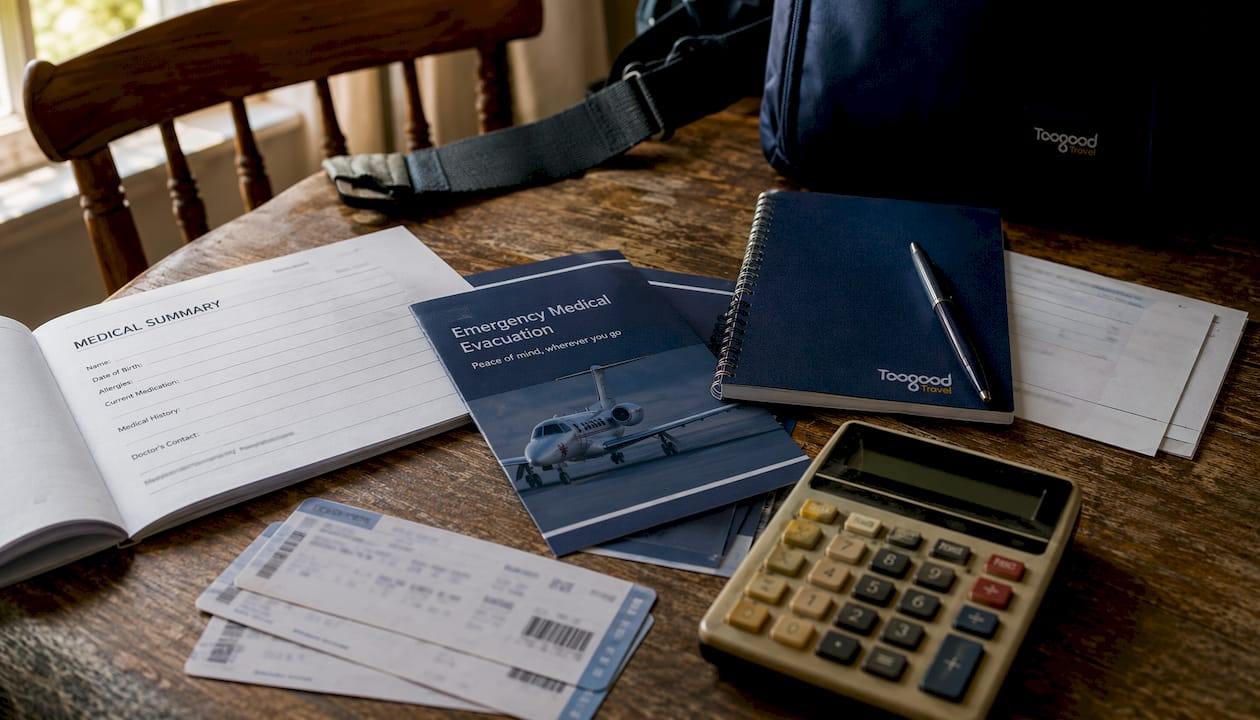
Comprehensive travel insurance covers emergency medical treatment, repatriation, trip cancellation, lost or stolen belongings, and personal liability. These are not edge-case scenarios. Cancellations happen because of illness, bereavement, redundancy, and adverse weather. Bags go missing. Flights get delayed for days. The Association of British Insurers (ABI) processes millions of travel claims every year, and the vast majority relate to events that travellers genuinely did not anticipate.
One aspect that catches people off guard is the timing of cancellation cover. If you book a holiday in January for a trip in August and only buy insurance a week before departure, you have left yourself exposed to cancellation costs for months.
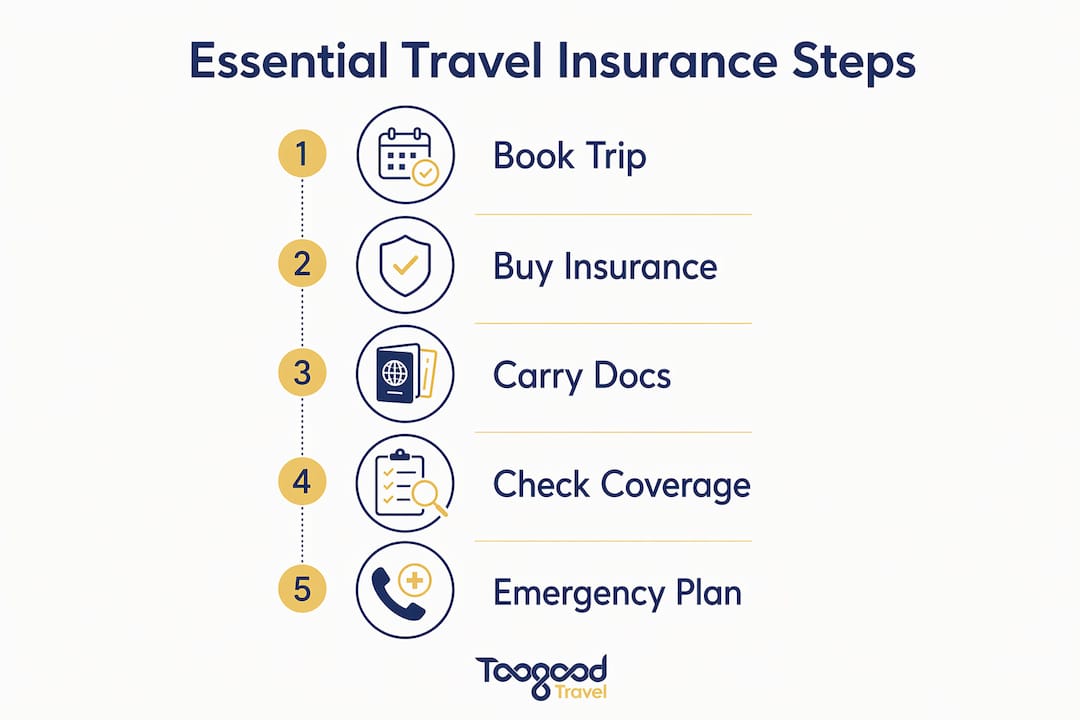
Pro Tip: Buy your travel insurance the same day you book your trip. The FCDO advises purchasing immediately after booking so that cancellation cover begins straight away, protecting your investment from day one.
Is travel insurance legally required for UK travellers?
Travel insurance is not a legal requirement for UK residents travelling domestically or to most international destinations. No British law compels you to hold a policy before boarding a flight. That said, the legal picture varies considerably depending on where you are going and how you are travelling.
| Destination / Situation | Insurance Requirement |
|---|---|
| UK domestic travel | Not required by law |
| EU and European countries | Not legally required; GHIC provides limited state healthcare |
| Thailand | Proof of insurance required for entry |
| Turkey | Insurance required as part of visa conditions |
| Cuba | Mandatory travel insurance for all visitors |
| Cruise holidays | Most cruise lines require passengers to hold cover |
| Schengen visa applications | Travel medical insurance often mandatory |
The GHIC (Global Health Insurance Card) and its predecessor the EHIC (European Health Insurance Card) are worth carrying for European travel, but they are not a substitute for a full policy. They grant access to state healthcare in EU countries and Switzerland, yet they do not cover repatriation or all medical expenses. A serious accident requiring an air ambulance back to the UK is entirely outside their scope.
Some package holiday providers and specialist operators also build insurance requirements into their booking terms. If you are planning a yacht charter, for instance, cover is typically a contractual requirement for yacht charters rather than an optional extra.
What coverage do UK travellers actually need?
The right level of cover depends on your destination, your health, your trip length, and the activities you plan to do. At a minimum, a solid policy for travel outside the UK should include:
- Emergency medical expenses: Covers hospital treatment, surgery, and specialist care abroad. For the USA, look for cover of at least £2 million; for worldwide cover generally, £5 million or more is advisable.
- Repatriation: Pays for a medically supervised flight or air ambulance back to the UK if you cannot travel commercially.
- Cancellation and curtailment: Reimburses pre-paid, non-refundable costs if you have to cancel before departure or cut your trip short due to illness, injury, or bereavement.
- Baggage and personal belongings: Covers loss, theft, or damage to luggage and valuables, though individual item limits apply.
- Personal liability: Protects you if you accidentally injure another person or damage their property, with cover typically starting at £1 million.
- Travel delay: Compensates for extended delays caused by circumstances outside your control.
- Missed departure: Covers additional travel costs if you miss your outbound flight due to a traffic accident or public transport failure.
- Adventure and sports activities: Standard policies often exclude activities like skiing, scuba diving, or white-water rafting. The ABI advises checking whether your planned activities are covered, and paying an additional premium if necessary.
For travel insurance for USA from UK, medical cover is the single most critical element. American healthcare costs are extraordinary, and even a short hospital stay can generate bills that would be financially devastating without protection.
What types of travel insurance policy are available?
Understanding your options makes it far easier to choose the right fit. UK insurers offer several distinct policy structures:
- Single-trip insurance: Covers one specific trip from departure to return. Ideal if you travel once or twice a year, or if your trip has unusual characteristics (very long duration, high-risk destination, specialist activities) that make a standard annual policy unsuitable.
- Annual multi-trip insurance: A single policy covering all trips taken within a 12-month period, subject to a maximum duration per trip (typically 31 or 45 days). If you take three or more holidays a year, annual vs single trip travel insurance almost always works out cheaper and simpler. The annual option also removes the risk of forgetting to buy cover before a last-minute break.
- Backpacker or long-stay policies: Designed for extended trips of several months, often covering multiple countries. Standard annual policies are not a substitute for these; long stays require specific arrangements tailored to the duration and destinations involved.
- Winter sports insurance: Adds cover for skiing, snowboarding, and related activities, including piste closure, ski equipment, and avalanche delay. This is almost never included in standard policies.
- Adventure travel insurance: Covers higher-risk activities such as trekking above certain altitudes, bungee jumping, or white-water rafting. Check the activity list carefully, as definitions vary between insurers.
- Pre-existing medical condition policies: Specialist policies that include declared health conditions within their cover. These are discussed in more detail below.
- Cruise insurance: Tailored to the specific risks of cruising, including missed port departure, cabin confinement, and itinerary changes. Some standard policies exclude cruise-specific claims entirely.
For practical guidance on booking your first holiday abroad, choosing the right policy type from the outset is one of the most important steps you can take.
Do you need travel insurance if you have pre-existing medical conditions?
If you have any pre-existing health conditions, travel insurance is not just advisable. It is genuinely critical, and the way you approach it matters enormously.
UK insurers require you to declare all pre-existing medical conditions at the point of purchase. This includes conditions that are currently being investigated or awaiting diagnosis, not just those already confirmed. Failing to disclose a condition, even unintentionally, can invalidate your entire policy. If you then need medical treatment abroad related to that condition, you could face the full cost personally.
Here is a practical checklist for travellers with medical conditions:
- Declare everything. List all conditions, medications, and any recent hospital visits or investigations, even if you consider them minor.
- Get written confirmation of what is and is not covered under your policy before you travel.
- Shop around with specialist insurers. Conditions like diabetes, heart disease, or a history of cancer are routinely covered by specialist providers, often at competitive premiums.
- Carry a letter from your GP summarising your conditions and current medications, translated into the local language if possible.
- Check medication rules for your destination. Some countries restrict the import of certain prescription drugs.
- Review your policy annually. If your health changes, your cover may need updating before your next trip.
The financial risk of non-disclosure is severe. Medical bills abroad for a condition that was not declared can be extremely expensive, with no recourse to your insurer.
What travel insurance will not cover
Knowing the exclusions is just as important as knowing what a policy includes. Most UK travel insurance policies will not pay out in the following situations:
- Travelling against FCDO advice: If the Foreign, Commonwealth & Development Office (FCDO) advises against all or all but essential travel to your destination and you go anyway, your policy will almost certainly be void. This applies even if you have paid your premiums in full. Always check FCDO travel advice before booking and again before departure.
- Undisclosed pre-existing conditions: As covered above, non-disclosure invalidates claims related to that condition, and in some cases the entire policy.
- Reckless behaviour: Claims arising from excessive alcohol consumption, drug use, or deliberate self-harm are routinely excluded.
- Undeclared high-risk activities: Skiing, diving, or trekking at altitude without the appropriate add-on will not be covered under a standard policy.
- Unattended belongings: If your bag is stolen while left unattended in a public place, many insurers will reject the claim.
- War and terrorism: Many policies exclude acts of war entirely. Terrorism cover varies significantly between providers, so read the wording carefully.
- Long-term stays or relocation: Standard travel insurance is not designed for permanent moves or extended stays. Expatriate or long-stay policies exist for these situations.
- Losses covered by other means: If an airline loses your bag and compensates you under their own liability, your insurer will not pay out on top of that.
UK-specific considerations: GHIC, FCDO advice, and when to buy
GHIC and EHIC: useful but limited
The Global Health Insurance Card (GHIC) replaced the EHIC for most UK residents after Brexit. Both cards provide access to state healthcare in EU countries and Switzerland at the same cost as local residents, which can be genuinely helpful for minor treatment. What they do not cover is the gap that matters most in a serious emergency: repatriation, private treatment, or medical costs in countries outside the EU and Switzerland.
| Protection | GHIC / EHIC | Travel Insurance |
|---|---|---|
| State hospital treatment in EU | ✅ Yes | ✅ Yes (usually) |
| Private medical treatment | ❌ No | ✅ Yes |
| Medical repatriation to UK | ❌ No | ✅ Yes |
| Trip cancellation | ❌ No | ✅ Yes |
| Lost or stolen baggage | ❌ No | ✅ Yes |
| Personal liability | ❌ No | ✅ Yes |
| Cover outside EU/Switzerland | ❌ No | ✅ Yes (worldwide policies) |
| Travel delay compensation | ❌ No | ✅ Yes |
FCDO travel advice and your policy
The FCDO publishes destination-specific travel advice at gov.uk, updated regularly to reflect political instability, natural disasters, health risks, and security threats. Ignoring that advice does not just put you in physical danger. It puts your insurance at risk too. If the FCDO advises against travel to a destination and you travel regardless, your insurer is entitled to refuse any claim you make, regardless of whether the claim is connected to the reason for the advisory.
Buy insurance immediately after booking
The FCDO is explicit on this point: buy your policy as soon as you book your trip. Cancellation cover only begins from the date of purchase. If you book in January and buy insurance in March, any cancellation costs incurred between those dates are yours to absorb.
Pro Tip: Once your policy is in place, carry a printed copy of the full document and your insurer’s 24-hour emergency number. Share both with a trusted contact in the UK so they can assist if you are incapacitated abroad.
How to choose the right travel insurance policy
Choosing well takes a little more than grabbing the cheapest quote. Use this checklist to guide your decision:
- Start with your destination. Medical costs vary dramatically by country. Travel insurance for USA from UK requires substantially higher medical cover than a European city break.
- List every activity you plan to do. Skiing, diving, hiking, and water sports all need specific cover. Check the policy’s activity list before buying.
- Calculate your total trip cost. Your cancellation cover should match the full pre-paid, non-refundable value of your holiday, including flights, accommodation, and excursions.
- Declare all medical conditions honestly. Use a specialist insurer if standard providers decline or quote prohibitively.
- Compare excess levels. A lower premium often comes with a higher excess. Work out which combination makes financial sense for your trip.
- Check the emergency assistance service. A 24-hour helpline staffed by medical professionals is worth paying for, particularly for long-haul travel.
- Decide between annual and single-trip cover. If you take multiple holidays a year, an annual multi-trip policy typically offers better value and removes the risk of travelling uninsured.
- Read the exclusions section. Not the summary. The actual policy wording. This is where the important limitations live.
- Confirm the insurer is FCA-regulated. All legitimate UK travel insurers are authorised and regulated by the Financial Conduct Authority (FCA).
For complex or multi-destination trips, working with a specialist travel agent can help you identify the right level of cover alongside your itinerary. Toogood Travel’s holiday protection guidance covers the key considerations for protecting your booking from the moment you confirm it.
Ready to plan your next adventure with confidence?

At Toogood Travel, we believe every great trip starts with the right foundations, and that means knowing your holiday is protected before you set off. Whether you are planning a luxury cruise, a family beach holiday, or a once-in-a-lifetime long-haul adventure, we are here to help you plan every detail with confidence.
Explore your next adventure with Toogood Travel and travel knowing you are covered.
Key takeaways
Travel insurance is not legally required for most UK travellers, but the financial risk of travelling without it, particularly for medical emergencies abroad, makes it an essential part of any trip plan.
| Point | Details |
|---|---|
| Not legally mandatory, but vital | Travel insurance is not required by UK law, but medical costs abroad can reach tens of thousands of pounds without it. |
| Some countries require proof | Thailand, Turkey, and Cuba require evidence of travel insurance as a condition of entry or visa. |
| GHIC has significant gaps | The GHIC covers state healthcare in the EU but does not cover repatriation, private treatment, or non-medical losses. |
| Declare all medical conditions | Failing to disclose pre-existing conditions can invalidate your entire policy and leave you liable for all costs. |
| Buy immediately after booking | Cancellation cover only starts from the purchase date, so buying on the day you book protects your full investment. |
FAQ
Is travel insurance legally required for UK travellers?
No. UK law does not require you to hold travel insurance before travelling domestically or abroad. However, some countries, including Thailand, Turkey, and Cuba, make it a condition of entry, and certain travel providers such as cruise lines may also require it.
Is it okay to travel without travel insurance?
Technically yes, but the financial risk is substantial. Without cover, you are personally liable for all medical costs, repatriation expenses, and any other losses incurred abroad. A serious medical emergency can cost tens of thousands of pounds, making uninsured travel a significant gamble.
Is travel insurance worth it for short European trips?
Yes, even for a weekend break in Europe. While your GHIC provides access to state healthcare in EU countries, it does not cover repatriation, cancellation costs, lost baggage, or personal liability. A short-trip policy is typically inexpensive relative to the protection it provides.
Do I need to declare pre-existing conditions?
You must declare all pre-existing medical conditions, including those currently under investigation. Non-disclosure can void your policy entirely, leaving you responsible for all costs if you need treatment abroad related to that condition.
When is the best time to buy travel insurance?
The FCDO recommends buying travel insurance immediately after booking your trip. This ensures cancellation cover is in place from day one, protecting your investment against unforeseen events before you even depart.
