
TL;DR:
- April to May and November are the best months to visit Florida, offering comfortable weather, lower prices, and manageable crowds. The state’s subtropical climate has a dry season from November to April and a wet season from May to October, with hurricane risk overlapping the wet season. Planning around the hurricane season involves flexible bookings, insurance, and awareness of evacuation zones to ensure a safe and enjoyable trip.
April to May and november are the best months to visit Florida, offering temperatures between 22–31°C, 30–40% lower prices compared to peak winter, and manageable crowd levels across the state’s beaches, theme parks, and cities. Florida operates on a subtropical two-season climate: a dry season running from november through april, and a wet season from may through october. Understanding this pattern is the single most useful thing you can do before booking. Hurricane season officially runs from 1 June to 30 November, which overlaps with both the wet season and some of the state’s most affordable travel windows. Get the timing right, and Florida rewards you with stunning weather, shorter queues, and genuinely good value.
How does Florida’s weather vary by month?
Florida’s subtropical climate divides neatly into two seasons. The dry season (november to april) brings low humidity, clear skies, and comfortable temperatures. The wet season (may to october) delivers daily afternoon thunderstorms, higher humidity, and the risk of tropical storms.
Monthly conditions vary considerably, and knowing what to expect each month helps you plan around your priorities.
| Month | Avg temperature | Rainfall | Humidity | Best for |
|---|---|---|---|---|
| January | 15–22°C | Low | Low | Snowbirds, beach walks |
| February | 16–23°C | Low | Low | Outdoor sightseeing |
| March | 18–26°C | Low | Moderate | Beach holidays, theme parks |
| April | 20–28°C | Low | Moderate | Shoulder season sweet spot |
| May | 23–31°C | Moderate | Moderate | Warm beaches, fewer crowds |
| June | 25–33°C | High | High | Budget travel, afternoon storms |
| July | 26–34°C | High | Very high | Peak summer heat |
| August | 26–34°C | High | Very high | Hottest month, storm risk |
| September | 25–32°C | High | High | Cheapest prices, highest storm risk |
| October | 22–29°C | Moderate | Moderate | Late shoulder, improving conditions |
| November | 18–27°C | Low | Low | Excellent all-round conditions |
| December | 15–23°C | Low | Low | Peak season begins, prices rise |
March sees spring break crowds spike sharply, which pushes prices up and theme park queues out. May offers warm ocean temperatures ideal for swimming, with afternoon storms manageable by planning outdoor activities in the morning. November stands out as a genuinely excellent month: temperatures average 24–28°C, hurricane season winds down on 30 November, and prices remain reasonable before the december peak rush begins.
Ocean water temperatures stay warm enough for comfortable swimming from may through october, peaking around 29°C in august. Even in january, Gulf Coast waters hover around 20°C, which is perfectly pleasant for a paddle.
What is Florida’s hurricane season and how does it affect travel?
Atlantic hurricane season runs officially from 1 June to 30 November. Peak risk falls between mid-august and mid-october, with 10 September recognised as the climatological peak day. That is a specific, well-established pattern, not a vague warning.
The reality of hurricane season is more nuanced than most headlines suggest. The vast majority of days during this period pass without any storm threat. Hurricanes require specific atmospheric conditions to form and track toward Florida, and the National Hurricane Center publishes five-day forecast tracks that give travellers meaningful advance warning. Monitoring these forecasts rather than reacting to sensational news coverage is the practical approach.
Here is what you need to know before travelling during hurricane season:
- Book refundable rates. Flexible cancellation policies cost a little more upfront but protect your investment if a storm approaches your destination.
- Take out travel insurance. Comprehensive travel insurance cover that includes trip cancellation, curtailment, and weather disruption is non-negotiable for wet season travel.
- Know your hotel’s procedures. Hotels and resorts have hurricane response protocols that activate when a storm track becomes imminent. Ask your accommodation about their procedures before you arrive.
- Understand evacuation zones. Florida’s counties publish evacuation zone maps. Coastal Zone A properties face the highest risk. Inland accommodation carries considerably less exposure.
- Monitor the National Hurricane Center. Their five-day track forecasts are the most reliable source of information. Check them daily during peak season.
Pro Tip: Book accommodation slightly inland during hurricane season. You still get easy beach access, but you sit outside the highest-risk coastal evacuation zones and often pay lower nightly rates.
First-time visitors frequently overestimate the likelihood of a direct hurricane hit. Experienced Florida travellers weigh the trade-offs honestly: lower prices, thinner crowds, and warm weather against a genuine but manageable risk. The key is preparation, not avoidance.
When is the best time to visit Florida for value and theme parks?
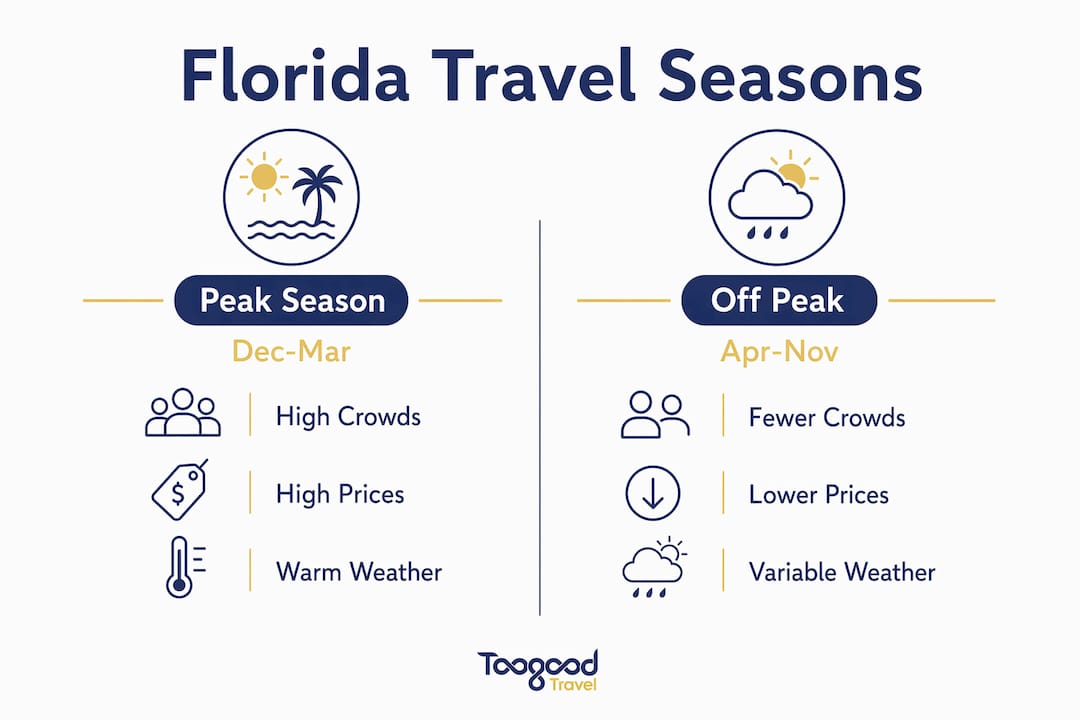
Florida’s travel seasons break into three clear tiers, each with distinct trade-offs across price, crowd size, and weather quality.
| Season | Months | Crowd level | Price level | Weather |
|---|---|---|---|---|
| Peak | December to March | Very high | High | Excellent |
| Shoulder | April to May, November | Moderate | Moderate | Very good |
| Low | June to October | Low to moderate | Low | Hot and stormy |
September prices can fall 40–60% below winter rates, making it the cheapest month to travel. That saving comes with the highest hurricane risk of the year, which makes may or late october a smarter choice for most travellers seeking genuine value without significant weather anxiety.
Theme park timing is where the shoulder season advantage becomes most tangible. Visiting during school term reduces average queue wait times from 36 minutes down to as low as 17 minutes. That difference transforms the experience at parks like Walt Disney World and Universal Orlando. Spring break in march and early april sends crowd levels soaring, with queue times and pricing both climbing sharply.
Practical planning tips for getting the best value:
- Book flights and accommodation 3–5 months in advance. Orlando International Airport (MCO) and Miami International Airport both experience significant congestion during peak periods. Advance transport booking prevents arrival-day delays turning into half-day ordeals.
- Travel in early May. UK school half-term falls in late May, so early May sits in a genuine sweet spot: warm weather, low crowds, and pre-summer pricing.
- Consider late October. Hurricane risk drops noticeably after mid-october, temperatures ease to a comfortable 22–29°C, and prices remain well below december levels.
Pro Tip: Many UK travellers find early May travel offers a superior balance of weather and crowd experience over traditional peak and off-peak months. It sits just before the US Memorial Day rush and after the Easter holiday spike.
For families, building a custom holiday itinerary around school term dates rather than school holidays consistently delivers shorter queues and lower costs.
What activities suit each Florida season?
Florida’s appeal shifts with the seasons, and matching your activities to the right time of year makes a real difference to what you experience.
Beach and water activities peak from april through june, before the most intense summer heat and storm activity arrives. The Gulf Coast beaches around Clearwater and St Pete offer calm, warm water and stunning sunsets. Atlantic-side beaches like Daytona and Fort Lauderdale suit those who prefer a livelier atmosphere. Ocean temperatures stay swimmable well into november on both coasts.
Wildlife encounters follow their own calendar entirely:
- Manatee viewing is best from november through march, when manatees gather in warm springs and power plant outflows to escape cooler Gulf waters. Crystal River on Florida’s Nature Coast is the premier location.
- Sea turtle nesting season runs from may through october, with loggerhead, green, and leatherback turtles coming ashore on Atlantic beaches after dark.
- Bird watching peaks during spring migration in april and may, when Florida’s wetlands and coastal areas fill with species passing through on their way north.
- Whale shark sightings off the Florida Keys occur most reliably between june and september, coinciding with the wet season.
Festivals and events give each season a distinct character. The Miami Art Basel festival in december draws international visitors and coincides with peak season pricing. The Florida Film Festival in april falls neatly within the shoulder season window. Key West’s Fantasy Fest in late october offers a vivid cultural experience as hurricane season winds down.
Outdoor adventures including hiking in the Everglades and cycling the Florida Keys Overseas Heritage Trail are best tackled from november through april. Afternoon thunderstorms during the wet season make extended outdoor activity uncomfortable and occasionally dangerous. Morning starts and indoor afternoon plans work well for those visiting during summer months.
Key takeaways
The shoulder months of april to may and november offer the most balanced Florida experience, combining pleasant weather, moderate pricing, and manageable crowds.
| Point | Details |
|---|---|
| Shoulder months win overall | April to May and November deliver the best mix of weather, price, and crowd levels. |
| Hurricane season is manageable | Book flexibly, take out travel insurance, and monitor National Hurricane Center forecasts. |
| Theme parks need school-term timing | Visiting during UK school term cuts average queue times from 36 to as low as 17 minutes. |
| September is cheapest but riskiest | Prices drop 40–60% below winter rates, but hurricane risk peaks simultaneously. |
| Activity timing matters | Manatee viewing suits winter; beach swimming peaks in spring; wildlife festivals span all seasons. |
My honest take on timing a Florida holiday
I have helped a lot of people plan Florida trips over the years, and the question I hear most often is whether hurricane season is genuinely dangerous or just a scare story. The honest answer sits somewhere in between.
Most days during hurricane season pass without incident. The storms that do form give meaningful advance warning through the National Hurricane Center’s forecasts. The real risk is not being caught in a hurricane. It is booking a non-refundable holiday, ignoring the forecasts, and then scrambling when a storm approaches. That is entirely avoidable with the right insurance and flexible booking terms.
My personal recommendation for most travellers, particularly those visiting Florida for the first time, is early May. The weather is warm and settled, the theme parks are quieter than at almost any other point in the year, and the prices sit well below the december to march peak. You also avoid the spring break chaos that makes march feel like a different destination entirely.
For repeat visitors who know what they want, late october is underrated. The humidity drops, the crowds thin out considerably, and you get Florida at its most relaxed. November is equally strong, with warm temperatures averaging 24–28°C and hurricane season ending on 30 November.
The one timing mistake I see regularly is booking september purely for the price. The savings are real, but so is the storm risk. May or late october gives you most of the savings with far less anxiety. Prioritise flexibility in your booking terms, invest in solid travel insurance, and Florida will reward you regardless of when you go.
— Stuart Toogood
Planning your Florida holiday with Toogood Travel
Florida is one of those destinations that genuinely rewards good timing. Whether you are drawn to the theme parks of Orlando, the art deco streets of Miami, or the white-sand beaches of the Gulf Coast, choosing the right month transforms the experience.

At Toogood Travel, we specialise in putting together Florida holidays that work around your ideal travel window, your budget, and your priorities. From family-friendly packages timed around school terms to adult escapes in the quieter shoulder months, we match the trip to the traveller. We also make sure every booking includes proper holiday protection so you travel with confidence, whatever the season. Browse our full range of worldwide travel options and let us help you find the perfect Florida escape.
FAQ
When is the best time to visit Florida for good weather?
April to May and november offer the most pleasant conditions, with temperatures between 22–31°C, low humidity, and minimal rainfall. These months sit outside the most intense hurricane risk period.
What months should I avoid visiting Florida?
August and september carry the highest hurricane risk and the most intense heat and humidity. March and december bring peak crowds and the highest prices, making them less appealing for budget-conscious travellers.
Is it safe to visit Florida during hurricane season?
Visiting during hurricane season carries a manageable risk rather than a prohibitive one. Book refundable rates, take out comprehensive travel insurance, and monitor the National Hurricane Center’s five-day forecasts for reliable, up-to-date information.
When is the best time to visit Orlando theme parks?
May, september, and november offer the shortest queue times, with average waits dropping to as low as 17 minutes during school-term periods. Avoid spring break in march and the christmas holiday period for the most comfortable experience.
What is the cheapest month to visit Florida?
September consistently offers the lowest prices, with flights and accommodation falling 40–60% below winter peak rates. The trade-off is the highest hurricane risk of the year, so may or late october offer better value for most travellers.
